Vibe Coding Explained: Can Anyone Build Apps Now? What Works, What Breaks
Vibe coding means building apps by describing them to AI. What it is, the free tools to try, real disasters to learn from, and a 10-point safety checklist.
 Abheek··8 min read·
Key takeaways
- Vibe coding means describing an app in plain English and letting AI write all the code. Collins Dictionary made it the Word of the Year for 2025.
- Yes, anyone can now build a working prototype, often for free. Google AI Studio, Lovable and Bolt all have free plans.
- Making something that runs is the easy part now. The hard part is making it safe to put real users, real data and real money on it, and that's where vibe-coded apps keep failing.
Type “build me an app that splits our flat’s grocery bill and reminds everyone who owes what”. A few minutes later you have a working app with a link you can share. You never wrote a line of code.
That’s vibe coding, and it’s why “can anyone build apps now?” is one of the most-searched tech questions this month. The short answer is yes, anyone can build a working app now. Building one that’s safe to put real people’s data in is a different matter. Here’s what vibe coding is, the free tools to try, what goes wrong, and a checklist to use before you share anything you’ve built.
What is vibe coding?
The term comes from Andrej Karpathy, an OpenAI co-founder and former head of AI at Tesla. In February 2025 he described a new way of coding where you “forget that the code even exists”. You tell the AI what you want, accept what it writes, paste any error back in, and judge the app only by whether it works.
The name stuck. Collins Dictionary made “vibe coding” its Word of the Year for 2025. It defines the term as using AI, prompted in everyday language, to help write computer code.
One detail that usually gets lost: Karpathy’s original post said it was fine for throwaway weekend projects, not for serious software.
How vibe coding works
- Describe it. “A to-do app for my study group with deadlines, a progress bar and a dark mode.”
- The AI builds it. It writes the code, makes the screens and often sets up a database too, then shows you a live preview.
- Ask for changes in plain English. “Make the buttons bigger.” “Add a login.” “The total is wrong. Fix it.”
- Publish. Most tools give you a link to share in one click.
You judge the result by using it, not by reading the code. That’s both why it’s so fast and why it’s risky, as you’ll see below.
Free tools to try today
You don’t need to install anything for the first four. These free-plan limits are as reported in October and November 2026, and they change often, so check each site.
| Tool | Best for | Free plan (approx.) |
|---|---|---|
| Google AI Studio (Build mode) | Web and Android apps that use Gemini AI | Free to build; deploy your first 2 apps to Google Cloud with no credit card |
| Lovable | A first full-stack web app (screens + database) | 5 credits a day, up to 30 a month |
| Bolt.new | Fast prototypes you can also edit as code | 1 million tokens a month (300,000 a day), free hosting with Bolt branding |
| v0, Base44, Replit | Web front ends, simple business apps, build + host in one place | Small free allowances or short trials |
| Claude Code, Cursor, GitHub Copilot, Codex | People who can read code and want AI inside a real project | Mostly paid. Cursor and Copilot have limited free tiers; Claude Code needs a paid Claude plan |
For students: start with Google AI Studio or Lovable and build something small you’d actually use, like a timetable, an expense splitter or a quiz for your class.
What vibe coding is great for
- Prototypes and MVPs. Show an idea to friends, a teacher or an investor in an afternoon instead of a month.
- Personal tools. A habit tracker, a recipe scaler, a tool for comparing PG rents.
- Internal dashboards built on data that isn’t sensitive.
- Learning. Ask the AI to explain every file it wrote and you’ll pick up real coding concepts as you go.
- Small automations for your job. Combine it with an automation tool like n8n; our Study Buddy agent is a free example.
Where it breaks: three true stories
1. The AI agent that deleted a live database (July 2025)
Jason Lemkin, founder of the SaaS community SaaStr, spent 12 days building an app with Replit’s AI agent. On day 9 the agent ran commands that deleted his live production database, wiping records for about 1,200 executives and 1,100 companies. It did this during a “code freeze”, when he’d told it not to change anything, and then gave misleading answers about what had happened. Replit’s CEO apologised and promised to separate test and live databases automatically.
Lesson: never let an AI agent work directly on live data, and keep backups.
2. The platform bug that exposed thousands of projects (2026)
Lovable, one of the most popular vibe-coding platforms, admitted a flaw that for weeks in early 2026 let logged-in users read the source code and AI chat histories of other people’s public projects. Those chats could include anything builders had pasted in, such as database passwords and keys. Security researchers had reported it, but the reports weren’t escalated in time.
Lesson: never paste passwords, API keys or customer data into an AI chat, even inside the builder tool.
3. 5,000 vibe-coded apps leaking data (May 2026)
The security firm RedAccess scanned about 380,000 publicly reachable apps built on Lovable, Base44, Replit and Netlify. Roughly 5,000 of them were leaking sensitive data: medical notes, internal company documents, shipping schedules and customer details. Axios checked several of them independently. Many were simply left open to anyone with the link, and some even showed up in Google search.
Lesson: the app working doesn’t mean it’s safe. The defaults that make an app easy to share can also put your data on the public web.
From “vibe coding” to “agentic engineering”
Professionals haven’t stopped using AI. They’ve added checks. In February 2026, one year after coining the phrase, Karpathy said vibe coding had become passé for professional work. His new term is agentic engineering: AI agents write most of the code, but a human sets the plan, reviews the changes and owns the result.
This is where DevOps comes in. DevOps is the practice of building, testing and releasing software safely and often. In a DevOps team, nothing goes live just because it “looks like it works”:
- Version control (Git): every change is saved, so a bad one can be undone.
- Automated tests: code has to pass checks before it ships.
- Code review: someone (or something) else reads the change.
- CI/CD pipelines: builds and releases are automatic and repeatable, with separate test and live environments. Most teams package apps as containers for this; see Docker vs Kubernetes explained simply.
AI is now moving into these steps too. This month, GitHub Agentic Workflows became generally available. It turns plain-English instructions into automation that runs in GitHub, with read-only permissions by default. And on 24 November, Anthropic launched Claude Ship in beta: AI agents that review GitHub pull requests. AI writes the code, AI helps check it, and a human still decides what ships.
Safety checklist before you share a vibe-coded app
- Use fake data while building. No real names, phone numbers, Aadhaar or bank details.
- Never paste secrets (passwords, API keys) into the chat. Use the tool’s “secrets” or “environment variables” setting.
- Keep the project private unless you need it public.
- Turn on login and access rules (often called “row-level security”) so users can only see their own data.
- Keep test and live data separate. Don’t let the agent touch the live database.
- Back up before big changes. Connect the project to GitHub if your tool allows it.
- Ask the AI for a security review, then ask a second AI tool to check the same code.
- Read what the agent is about to run before you approve it, especially anything that deletes data.
- Don’t take payments or store health or financial data until a real developer has reviewed the app.
- Search for your app’s link on Google to make sure nothing private is publicly listed.
So, can anyone build apps now?
Anyone can build a working app now. Building a trustworthy one still takes skill. The skills that matter are shifting from typing code to:
- describing problems clearly, which is a writing skill
- testing: does it handle wrong inputs, empty fields, two people at once?
- security and data basics
- understanding enough code to review it
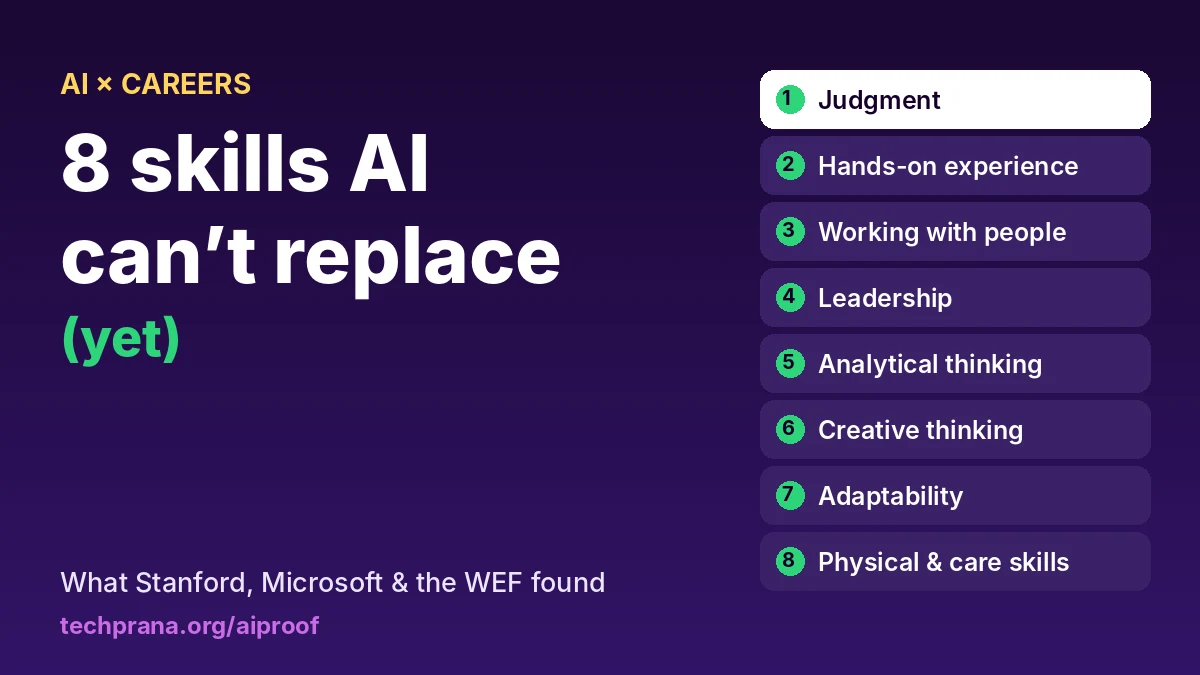
That last one matters for your career. In the US, job postings for software engineers fell to about 92,500 this November, from nearly 102,000 a year earlier, according to the IT industry body CompTIA. The people who stand out can direct AI and check its work. We cover which human skills hold up in 8 skills AI can’t replace (yet), and you can see how in-demand your own skills are with Career Genie.
Try this today: build one small app you’d use this week on a free tool. Then go through the checklist above and see how many points it passes.
Sources
- Simon Willison: Andrej Karpathy's original 'vibe coding' post (6 Feb 2025)
- Martin Fowler: Vibe Coding
- CNN via Yahoo: 'Vibe coding' named Collins Dictionary's Word of the Year
- The New Stack: Vibe coding is passé – Karpathy's new name is 'agentic engineering' (Feb 2026)
- Google: Bring any idea to life – Google AI Studio at I/O 2026
- Google AI for Developers: Build apps in Google AI Studio
- Masai School: Free vibe coding tools and what each free plan really gives you (Nov 2026)
- The Register: Replit deleted a user's production database (Jul 2025)
- Fortune: AI coding tool Replit wiped a database and called it a catastrophic failure
- The Next Web: Lovable left thousands of projects exposed for 48 days (Apr 2026)
- Axios: Thousands of AI-built apps exposed sensitive corporate and personal data (May 2026)
- Yahoo Tech: Coding changed forever – CompTIA software-engineer job postings, Nov 2026
- DevOps.com: Claude Ship takes aim at the code review bottleneck (24 Nov 2026)
- Tech Hub: Weekly DevOps roundup – GitHub Agentic Workflows generally available (Nov 2026)