
ChatGPT Can Now Buy Things for You – But United Will Cancel Your Ticket If It Does
In the same week, OpenAI launched ChatGPT Wallet so AI agents can check out for you, and United Airlines banned AI agents from booking its tickets. What changed.
 Abheek··5 min read
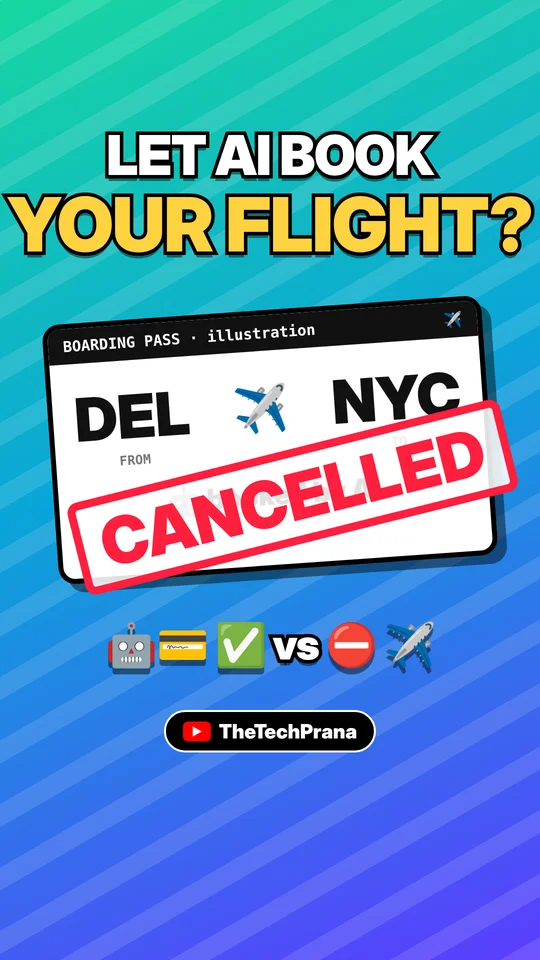
Watch the Short
The 60-second version is on YouTube. This article is the full story.
New Shorts every week on tech trivia, AI and gadgets.
Subscribe to TheTechPranaKey takeaways
- 13 Nov 2026: OpenAI launched ChatGPT Wallet – its AI agents can now complete purchases for a limited number of U.S. ChatGPT Pro users, who approve each one with Face ID or a fingerprint.
- 11 Nov 2026: United Airlines changed its Contract of Carriage to ban AI agents from booking, changing or servicing tickets – even when a human supervises or approves – and can cancel bookings that break the rule.
- AI can still help you search United flights and compare prices. You just have to click "buy" yourself.
Two pieces of news landed two days apart in November 2026, and they point in opposite directions:
- 13 November: OpenAI made it possible for ChatGPT’s AI agents to buy things for you.
- 11 November: United Airlines said that if an AI agent books your ticket, it can cancel it.
The Short above covers it in 43 seconds. Here’s what each change actually says – and what it means if you use AI to plan travel or shopping.
On one side: ChatGPT Wallet
On Friday, 13 November 2026, OpenAI launched ChatGPT Wallet. It lets ChatGPT’s agents – OpenAI calls them “dots” – help you decide what to buy and then complete the checkout for you.
The key details, according to TechCrunch:
- Who gets it: for now, a limited number of U.S. ChatGPT Pro subscribers, aged 18+, with a U.S.-issued Visa, Mastercard or American Express card.
- You approve every purchase with a security check such as Face ID or a fingerprint.
- Your card number stays hidden. The card is charged through a payment token, so neither the agent nor the store sees your real card details.
- Normal card protections still apply, including rewards and disputes.
If you’ve read our explainer on AI vs agentic AI vs AGI, this is “Level 2” in action: you give a goal, and the agent takes the steps – including paying.
On the other side: United’s AI agent ban
On 11 November 2026, United Airlines published a revised Contract of Carriage – the legal terms between the airline and its passengers.
A new rule (Rule 6.J.6) adds AI agents to United’s list of prohibited ticketing practices, next to older banned tricks like hidden-city ticketing. It bans using AI agents to:
- book, change or service a United ticket, and
- buy any other United service or product – seats, upgrades and so on.
Three details make it stricter than it first sounds:
- Human approval doesn’t make it OK. The ban applies even if you supervise or approve what the agent does.
- It’s broad. United’s definition covers software that takes autonomous or semi-autonomous action – including AI assistants and AI-enabled browsers – and it reaches bookings made through travel agencies, not just united.com.
- United can cancel the booking. Under the contract, reservations made or changed this way are among those United may cancel.
United cites privacy, unintended purchases and regulatory requirements. But CEO Scott Kirby gave a blunter reason at an event in Chicago, as reported by The Wall Street Journal:
“To be honest, I don’t want to create another middleman.”
Airlines have spent years fighting online travel agencies over fees and who “owns” the customer. AI agents could become the next, even bigger, middleman – and United is drawing a line early.
What’s still unclear
- Enforcement: United says its systems can trace where bookings come from, but it hasn’t explained how it will spot an AI agent.
- Older tickets: the contract generally applies the rules in force when a ticket is issued, so tickets bought before 11 November shouldn’t be affected.
- Other airlines: United is the first major U.S. carrier to put this in writing. Whether others follow is the thing to watch.
So what can AI still do?
Here’s the practical line, based on reporting about United’s rule:
| ChatGPT Wallet (shopping) | United Airlines (flights) | |
|---|---|---|
| AI searches and compares | ✅ | ✅ |
| AI recommends what to buy | ✅ | ✅ |
| AI completes the purchase | ✅ with your Face ID / fingerprint | ❌ banned, even with approval |
| AI changes or manages the booking | – | ❌ banned |
| Who clicks “buy” | The agent, after you approve | You, yourself |
In short: AI can find your flight. You just have to buy it yourself.
Why this matters for you
- AI shopping is real, but early. ChatGPT Wallet is U.S.-only and limited to some Pro users for now. In India and elsewhere, you’ll still be clicking “buy” yourself for a while.
- Read the rules before letting an agent book travel. A booking that breaks an airline’s contract can be cancelled – and that’s a bad surprise at the airport.
- Expect more of these fights. Stores want AI agents to buy more. Companies that don’t want a new middleman will push back.
Your turn: would you let an AI spend your money? Yes with Face ID, only for small stuff, or never? Tell us in the YouTube comments.
Sources
- TechCrunch: ChatGPT's new wallet lets AI agents shop and check out for you (13 Nov 2026)
- CNBC: OpenAI launches ChatGPT Wallet (13 Nov 2026)
- View from the Wing: United Airlines CEO Scott Kirby bans AI agents from booking tickets
- Skift: United Airlines moves to block personal AI agents from booking flights (11 Nov 2026)
- PPC Land: United bans AI agents from buying its tickets, seats and upgrades
- Yahoo Travel: Why United Airlines is blocking AI from buying your tickets