
Edge Computing
Introduction-Edge Computing
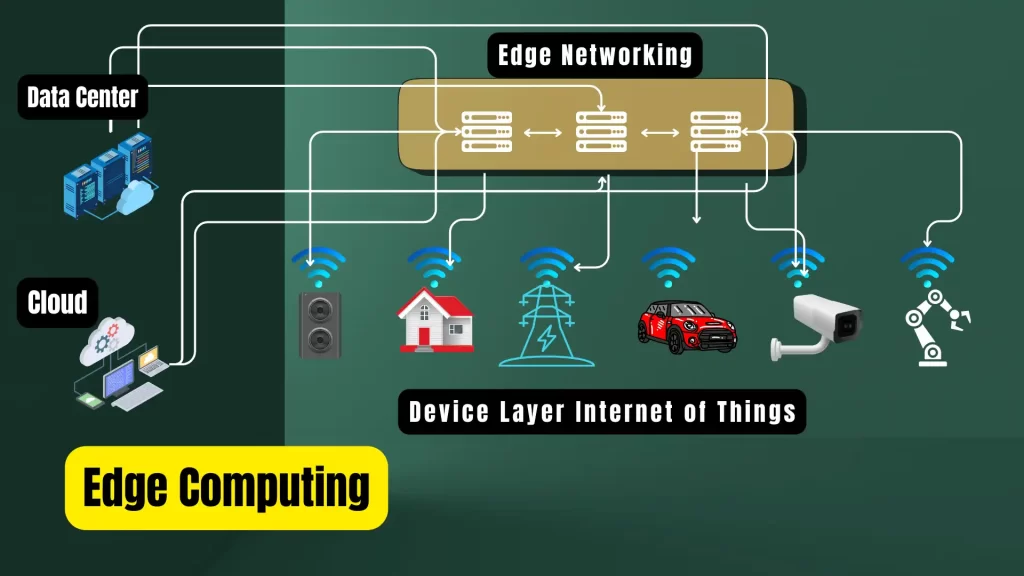
Edge computing shakes up the tech world by bringing enterprise applications closer to their data sources, like IoT devices or local edge servers. This cozy proximity to data leads to some seriously strong business perks: lightning-fast insights, snappier response times, and a boost in bandwidth availability. As IoT devices multiply like rabbits and flex their growing computing muscles, data volumes have skyrocketed to new heights—and they’re only getting bigger, thanks to the rise of 5G networks connecting more mobile gadgets than ever.
Once upon a time, the cloud and AI were supposed to automate everything and supercharge innovation by churning out actionable insights from data. But the sheer scale and complexity of data generated by these connected devices have left networks and infrastructure gasping for air.
Shuffling all that device-generated data to a central data center or the cloud? That’s a recipe for bandwidth and latency nightmares. Enter edge computing, the hero of efficiency! By processing and analyzing data closer to where it’s created, edge computing slashes latency. And with 5G networks thrown into the mix, mobile edge computing takes data analysis to warp speed, paving the way for deeper insights, quicker responses, and happier customers.
How is edge computing different from other computing models?
The first computers were massive, clunky beasts that demanded face-to-face interaction or access via terminals, which were really just the computer’s awkward sidekicks. But then along came personal computers, and suddenly, computing was no longer tied down. Personal computing took the spotlight, with apps running and data lounging comfortably on a user’s device—or, if you were fancy, in an on-premise data center.
Then, cloud computing entered the scene, shaking things up with a whole new set of perks. Instead of being chained to local machines, cloud services—hosted in vendor-managed “clouds” (fancy talk for a bunch of data centers)—could be accessed from any device with an Internet connection. Talk about a glow-up!
Cloud computing may cause latency due to the distance between users and the data centers hosting cloud services. Edge computing, on the other hand, brings computing closer to end users to reduce travel distance for data, all while maintaining the centralized aspect of cloud computing.
Use cases of Edge computing
- Healthcare: Edge computing brings a lot of new possibilities to healthcare, especially for things like medical monitoring devices. It could change the way we handle patient records, whether they’re in the hospital or at home. For example, when devices like heart rate monitors, temperature sensors, or glucose meters collect data, edge computing, along with smart technology, could quickly spot if something’s wrong with a patient and take action right away to help them.
- Automobiles: Self driving cars are not mainstream yet but that’s not too far either. In autonomous vehicles, the need for real-time data processing is critical. These cars must process vast amounts of information from sensors, cameras, and other onboard devices to navigate, detect obstacles, and respond to dynamic road conditions. Traditionally, data processing might involve sending information to a central server or the cloud, which could introduce delays due to transmission time. However, in self-driving cars, even a fraction of a second can make a difference between avoiding a collision and causing one. This is where edge computing shines.
Benefits of edge computing
Cost Savings
Edge computing minimizes bandwidth use and conserves server resources. Bandwidth and cloud resources are finite and come with a price tag. As every household and office gets loaded with smart cameras, printers, thermostats, and even toasters. Market research/forecasting agencies predict that by 2025, huge increase in IoT devices installed worldwide. To support all those devices, we’ll need to shift a significant amount of computation to the edge.
Performance
Moving processes to the edge offers a big advantage: it cuts down on lag. Whenever a device has to send information to a faraway server, it creates a delay. For instance, if two coworkers in the same office are chatting on an IM platform. They might notice a delay because each message has to leave the building, connect with a server halfway around the world. And then come back before it shows up on the other person’s screen. But if this process happens at the edge, with the company’s internal router handling the chats, that annoying delay wouldn’t happen.
Similarly, users of various web applications will experience delays whenever processes need to communicate with an external server. The length of these delays depends on their available bandwidth and the server’s location. However, by moving more processes to the network edge, these delays can be avoided altogether.
Conclusion
Edge computing stealthily reduces latency and eases the load on centralized servers. It orchestrates real-time reactions and streamlines processing. While cloud computing can cause latency due to distant data centers, edge computing brings data closer to users, maintaining the cloud’s efficiency. As smart devices proliferate, edge computing prevents data overload, ensuring our connected world runs smoothly, one millisecond at a time.